Buyer wants the headline carrier price
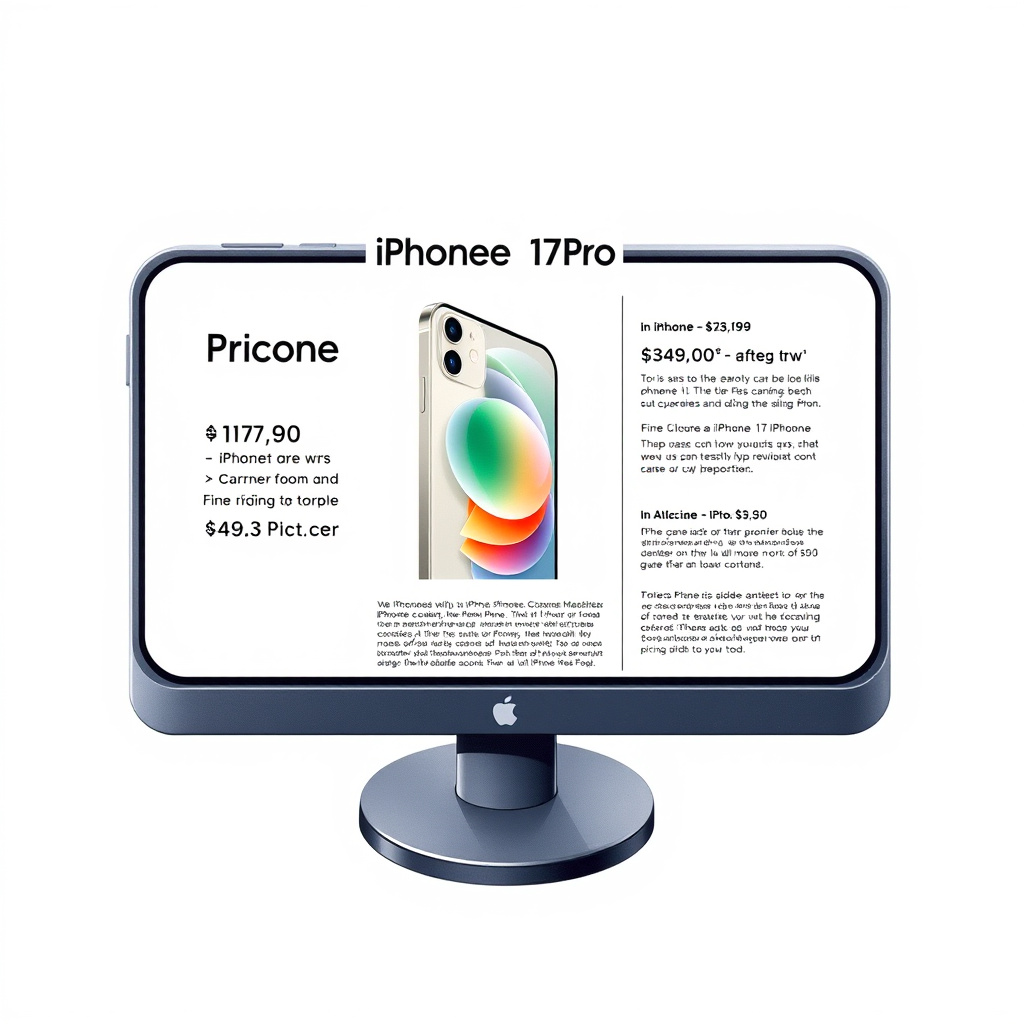
The number splashed across a carrier's landing page is rarely the number you pay. Verizon, T-Mobile, Metro and Cellcom all advertise the iPhone 17 Pro with a monthly bill credit rather than an upfront discount, which means the "free" or "$X off" framing only applies once the credits finish landing on your statement.
That credit is conditional. It's tied to a qualifying trade-in — a device in working condition, usually on a specific carrier plan — and it's spread across an instalment agreement rather than deducted at checkout. T-Mobile's iPhone 17 Pro page and Cellcom's listing both structure the offer this way: you finance the full retail price, then credits offset the monthly bill provided you keep the qualifying plan and trade-in device active for the term.
That structure matters because the effective price of a 256GB iPhone 17 Pro through a carrier can differ substantially from Apple's own listed price for the same configuration, which Apple sells outright or through its own instalment plan without requiring a trade-in or a locked-in carrier plan. If you don't have a trade-in, or you're not on the plan tier the promotion requires, you're effectively paying the unlocked price anyway — just financed monthly instead of paid once.
Before committing to a multi-year plan, it's worth lining up three numbers side by side:
- The carrier's advertised monthly price with full credits applied
- The same carrier's price if you don't qualify for the trade-in credit
- Apple's own price for the identical storage and colour, paid outright or via Apple's own instalment option
Only once those three are in front of you does "the carrier price" mean anything comparable to "the Apple price."
Shopper asks whether the Pro is worth the premium over the base iPhone 17
Whether the premium is worth it depends on whether you actually use the three things that differ: the camera system, the display, and battery endurance. Everything else — chip generation, software, core design language — is shared closely enough with the standard iPhone 17 that paying extra for it alone is hard to justify.
Camera hardware is where the separation is largest. The Pro's rear camera system adds telephoto reach and sensor capability the base model doesn't carry, which shows up most in low light and in zoomed shots rather than in everyday daylight snapshots where the two models tend to converge.
AppleInsider's three-months-later review is useful precisely because it isn't a launch-week impression — it reports on whether the Pro's advantages still feel meaningful after months of ordinary use, rather than in a controlled demo. That's the more honest test of a "premium" feature: does it still matter once the novelty wears off.
The practical move is to map the Pro-only features against your own habits rather than against a spec sheet:
| You mostly… | Base iPhone 17 | iPhone 17 Pro |
|---|---|---|
| Shoot daylight photos, social posts | Adequate | Marginal gain |
| Shoot low-light, zoom, or video-heavy content | Limited | Clear advantage |
| Charge once a day, light use | Sufficient | Overkill |
| Use the phone all day, heavy use | May fall short | Better margin |
If your answers land in the left column, the premium buys you headroom you won't use.
Battery life is quoted in playback hours per model
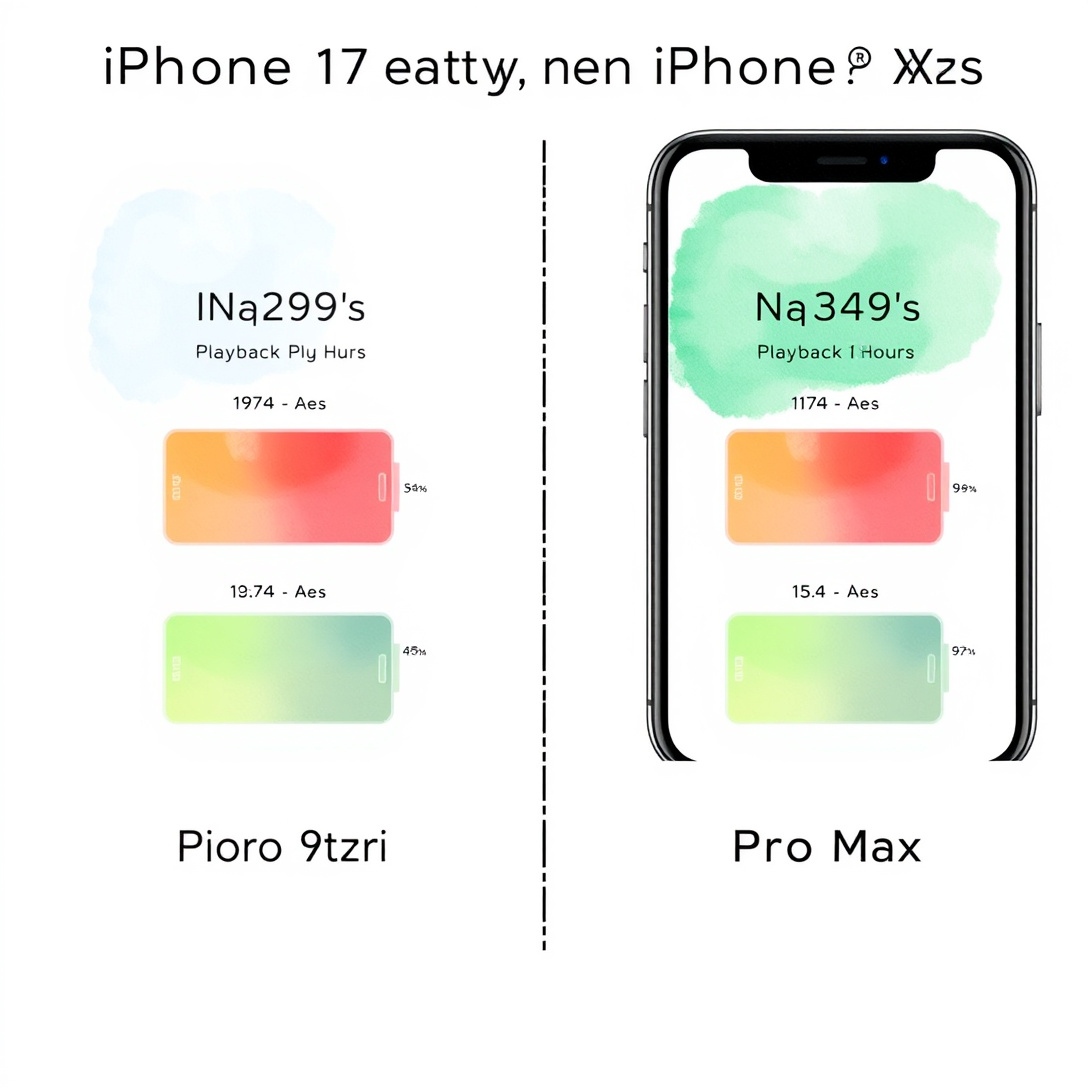
Apple states battery life in hours of video or audio playback, not as a measure of how long the phone lasts under your actual mixed use. That distinction matters more than the number itself — a rated "playback hours" figure comes from a controlled test (screen brightness fixed, no background apps, often airplane mode) that doesn't resemble a normal day of messaging, camera use, and app switching. Apple's iPhone page lists these figures per model, and they should be read as a ceiling, not an expectation.
Within that caveat, the relationship across the lineup is consistent generation to generation: a larger display housing a larger battery, paired with the same chip efficiency, typically rates higher for playback hours than the standard Pro. The Pro Max's advantage comes almost entirely from physical battery size rather than from any software or chip difference between the two Pro variants.
Real screen-on time is always going to sit well below the rated figure once you factor in call time, camera use, navigation, and cellular signal strength — none of which the playback rating accounts for.
If you're someone who reliably runs out of charge before the day ends, the fix isn't dimming the screen or closing background apps — it's sizing up to the model with the larger battery. Squeezing more out of the smaller Pro through settings adjustments buys minutes; moving to the Pro Max buys hours.
Shopper sees Cosmic Orange listed in some channels but not others
Cosmic Orange is a real, current finish — its absence from a particular retailer's page is a stocking decision, not evidence Apple has pulled it. Cellcom lists the 256GB Cosmic Orange configuration directly, while Metro by T-Mobile's listing advertises only two colour options in its 256GB tier, and Verizon and T-Mobile's own configurators vary in what's shown by default depending on stock at the time you look.
Carriers and retailers negotiate which colour-and-storage combinations they stock; a finish being unavailable on one storefront while fully in stock on another is normal, especially for a signature colour that launches with concentrated early demand. This is different from Apple discontinuing a finish outright, which would show up as its removal from Apple's own iPhone page, not merely from a single carrier's catalogue.
Before assuming Cosmic Orange has been pulled, check Apple's own store directly — a channel-level gap says nothing about the finish's actual lifecycle.
Display
The front screen is one of the three components — alongside the camera and battery — where the Pro separates from the base iPhone 17, though every carrier and retail page treats it as a spec-sheet line rather than a headline feature. Apple builds the 17 Pro around its Super Retina XDR panel with ProMotion's adaptive refresh behaviour and an always-on display mode, as listed on Apple's iPhone page and detailed further in the model's specification record. That hardware is fixed by Apple, not the carrier, so it's identical whether you buy through Verizon, T-Mobile, Metro, Cellcom or Apple directly.
iPhone 17 Pro
The iPhone 17 Pro is Apple's current Pro-tier smartphone, released as part of the iPhone 17 generation and positioned above the standard iPhone 17 in camera, display and battery specification. Its full specification record, including chip and material details, is maintained on its Wikipedia entry, and its official retail presence sits on Apple's iPhone page alongside the rest of the current lineup.
Rear camera system
The rear camera system is the single most consistently promoted feature of the 17 Pro across every retail and carrier listing, because it's the component most visibly upgraded over the base model. It's a multi-lens setup pairing wide, ultra-wide and telephoto optics, detailed in the iPhone 17 Pro's specification page, and it's the component most likely to justify the Pro's price premium for anyone who shoots regularly rather than occasionally.
Portrait mode
Portrait mode is the camera capture mode named repeatedly in body copy across retail pages, and it benefits directly from the Pro's added telephoto lens and larger sensor. The mode uses depth data from the multi-lens array to simulate a shallow depth of field around a subject, a capability that scales with the hardware behind it — which is why Pro models tend to produce more convincing background separation than the base iPhone in the same lighting.
256GB storage option
256GB is the base storage configuration used across nearly every carrier and retail listing for the iPhone 17 Pro, including Verizon's, T-Mobile's, Metro's and Cellcom's pages. That consistency is convenient for comparison shopping: because 256GB is the common entry point everywhere, it's the one configuration where price and promotion terms can be compared apples-to-apples across channels without also normalising for storage differences.
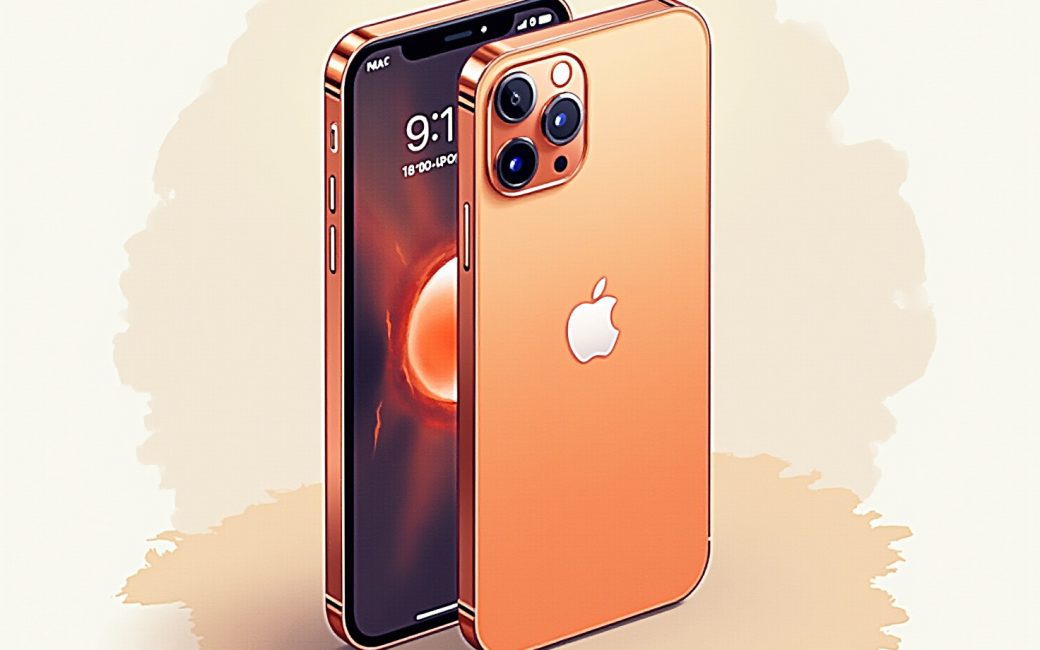
Cosmic Orange finish
Cosmic Orange is the signature colour of the 17 Pro generation, appearing in product titles across retail listings such as Cellcom's and referenced in Apple's own materials. Its prominence in marketing and titling is part of why its patchy availability across individual carriers reads, to some shoppers, as scarcity or discontinuation — when it's more often a stocking gap at a single retailer rather than anything to do with the finish's actual status.
Is the iPhone 17 Pro worth it now?
It's worth it if you actually use the camera system's added reach, care about battery margin over the base model, and can buy it at a price that reflects a real discount rather than a financed sticker price stretched over several years. It's a weaker case if your use is mostly daylight photos and light daily use, where the base iPhone 17 covers most of the same ground for less.
The months-later assessment from AppleInsider is a useful check against launch-week enthusiasm: it reports the Pro holding up well after extended use rather than losing its shine, which is a better signal of durability-of-value than any first-week impression. Combine that with a clear-eyed read of the carrier financing terms above, and "worth it" becomes a calculation you can actually run for your own habits and budget rather than a marketing line to accept or reject.
The price question sits underneath all of this. Apple's own listed price for the 256GB configuration, shown on Apple's iPhone page, is the number to treat as the baseline — it's what you pay with no trade-in and no plan lock-in. Every carrier price you'll see advertised is either that same figure spread across an instalment agreement, or that figure minus credits that only apply once a qualifying trade-in and plan are in place. Reconciling those two before you buy is the only way to know what the phone is actually going to cost you.
Is Apple discontinuing the iPhone 17 Pro?
No — the iPhone 17 Pro is Apple's current Pro-tier model and remains listed as part of the active lineup on Apple's own iPhone page, with no indication from Apple of a withdrawal. Confusion on this point usually traces back to the channel-stocking issue covered above: a colour or storage combination going temporarily unavailable at one carrier gets misread as the model itself being phased out.
A model at this tier typically stays Apple's current, full-price offering until a successor generation is announced, at which point pricing and positioning shift rather than the phone being pulled outright. Until that happens, the 17 Pro sits at the top of Apple's current lineup, not somewhere near its exit.
If you're deciding between waiting and buying now, check Apple's own store for current listing status directly, and use the carrier comparison above to work out what "now" actually costs you before you sign a multi-year plan.