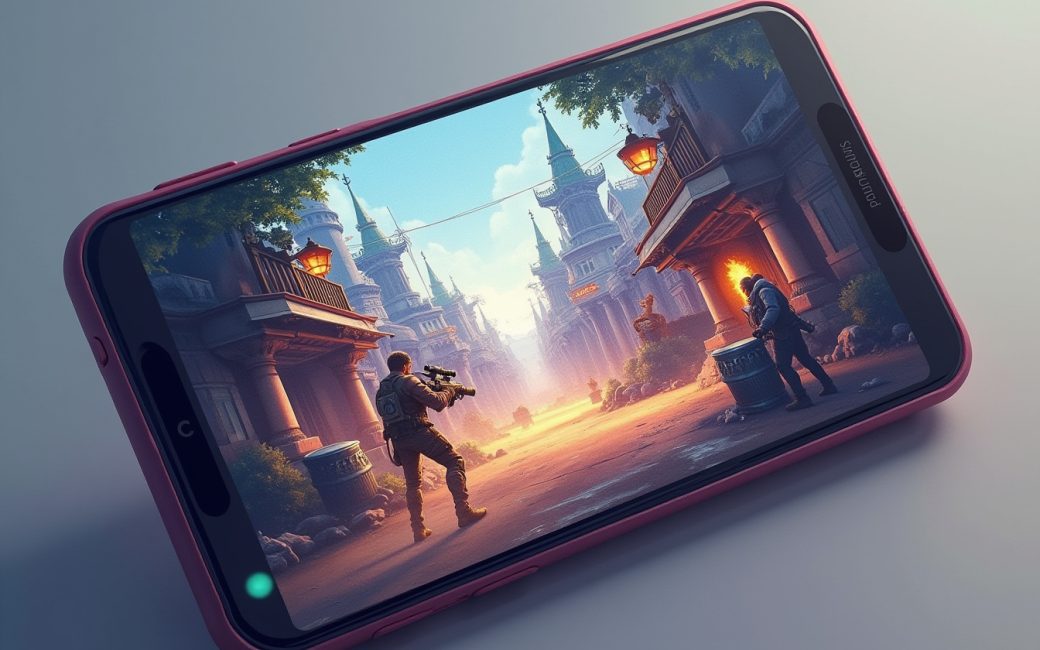
Demanding 3D mobile game runs the chipset at full load
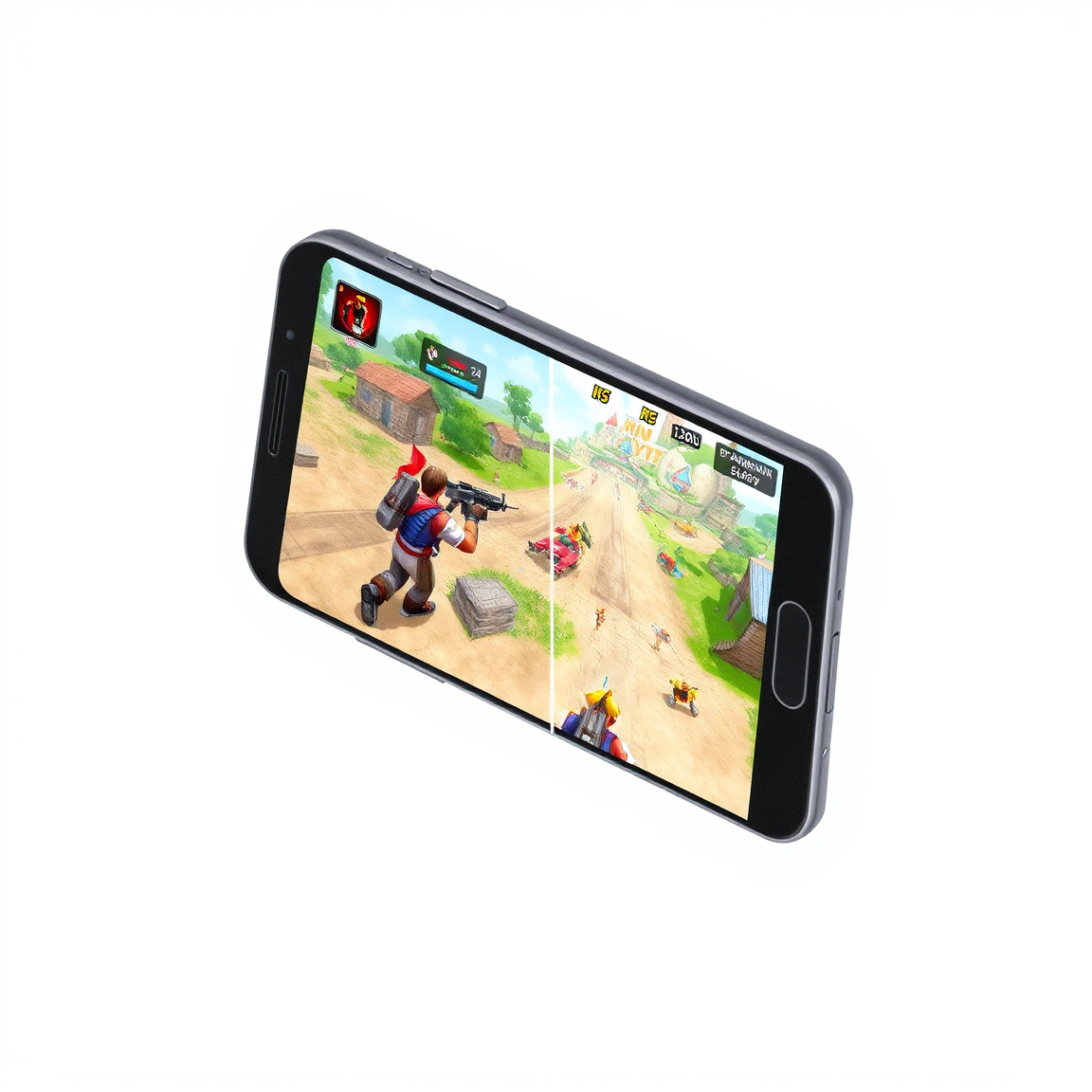
A demanding 3D title — anything with real-time shadows, open-world streaming, or console-quality lighting — pushes a phone's chipset to its thermal ceiling within minutes, not hours. That's the moment a gaming phone either proves its price tag or doesn't.
Heat builds up in a thin phone chassis. Sustained GPU work generates heat faster than a slim aluminum-and-glass body can dissipate it. There's limited surface area, no fan, and a battery packed right next to the chip generating the heat.
Chipset throttles and frame rate drops mid-session. Once internal temperature sensors hit their limit, the system clocks the processor down to protect the hardware. This is normal, expected behaviour on every phone — the difference between models is how much clock speed they sacrifice, and how soon.
A phone with a vapour chamber or active cooling holds clocks longer. Gaming-branded handsets typically build in a vapour chamber, graphite sheeting, or in some cases a clip-on fan, specifically to move heat away from the chip faster than a standard flagship can. Reviewers who put phones through extended play sessions consistently find that the phones holding their frame rate longest are the ones with the most aggressive cooling hardware, not necessarily the highest peak chip tier — Tom's Guide's testing treats sustained performance across a play session as a separate measurement from a single benchmark run, precisely because the two numbers diverge once heat accumulates.
Most current gaming phones and flagships alike are built around the same class of top-tier Qualcomm chip, the kind of Snapdragon 8-series silicon that leads mobile benchmark charts each generation. That chip supplies the raw graphics throughput a demanding title needs, but the number printed on a spec sheet says nothing about how long the phone can actually hold that throughput once the silicon heats up. Two phones can ship the exact same flagship-tier chipset and perform very differently forty minutes into a session, because one has a cooling system built to match the chip's ceiling and the other doesn't. GamesRadar's gaming phone roundup and IGN's picks both weight cooling design and sustained-play behaviour alongside chip tier for exactly this reason — the chipset is only half the story; the thermal solution around it decides how much of that chip's potential a player actually gets to use.
This is also why a benchmark score is a poor predictor of how a game will feel deep into a session. A synthetic benchmark runs for a fixed, short burst, before the chip has had time to heat-soak. A real session — especially anything approaching an hour of a graphically heavy title — is a different workload entirely. Buyers comparing two phones with the same chipset class should look past the headline number and ask what happens to frame rate after the phone has been under load for a while, and whether independent testing shows a steep drop-off or a stable line.
Buyer wants smoother-looking gameplay

Smoother-looking gameplay comes from a display that can actually show the extra frames a fast chipset renders — the panel is the bottleneck as often as the chip is. A phone marketed on chip speed alone can still look choppy if its screen refresh rate can't keep up with what the processor is producing.
Frame delivery is limited by panel refresh rate. A 60Hz screen can only display 60 distinct frames per second no matter how many the GPU renders; anything beyond that is wasted work. This is the reason gaming phones are specced around their display almost as heavily as their chip — Android Central's buying guide and TechRadar's rankings both treat display refresh rate as one of the headline specs, not a footnote.
A 120Hz-class display shows more of the frames the chipset produces. Panels rated at 120Hz or higher let a capable chipset's output actually reach the player's eyes, which is what produces the smoother, more responsive feel gaming phones are sold on. Higher touch-sampling rates on the same panels also cut the delay between a finger touching the glass and the game registering the input, which matters more in fast-twitch titles than in turn-based or puzzle games.
Only games that support high frame rates realise the benefit. A 165Hz screen paired with a game engine that caps rendering at 30 or 60fps produces no visible improvement at all — the extra refresh rate is simply idle. This is the detail that gets skipped in most buying advice: the display spec is a ceiling, not a guarantee, and whether a buyer benefits from paying for a higher one depends entirely on whether the specific games they play are built to use it. Competitive shooters and rhythm games tend to support uncapped or high frame rates; many narrative, puzzle, and idle-style mobile games do not, and never will regardless of the phone underneath them.
Before paying a premium for a 144Hz or 165Hz panel, it's worth checking whether the games actually in rotation on a buyer's phone render above 60fps at all — for a large share of mobile gaming, they don't, and the extra hertz buys nothing.
Buyer asks 'which device is best for gaming?'
There is no single best gaming phone — the honest answer is a decision rule, because "best" depends on which platform, which games, and which budget the buyer is already committed to. The choice splits cleanly along two paths.
Choice splits by platform: Android gaming phones versus iPhone. Android manufacturers build phones explicitly marketed and specced for gaming — shoulder triggers, vapour chambers, ultrasonic touch buttons, gaming-tuned software modes — while Apple makes no gaming-specific hardware at all, competing purely on the strength of its chip and its ecosystem of console-quality titles. T-Mobile's device picks and GamesRadar's coverage both frame the decision this way rather than naming one universal winner.
Android side offers gaming-specific hardware and wider price spread; iPhone competes on chip performance. Android gaming phones exist at nearly every price point, from budget models with a decent chip and no extras, up to dedicated gaming flagships with cooling fans and physical triggers. The iPhone lineup, by contrast, offers no dedicated gaming model — buyers get gaming performance as a byproduct of buying into Apple's top-tier chip, on whichever iPhone currently carries it.
| Factor | Android gaming phone | iPhone |
|---|---|---|
| Gaming-specific hardware | Shoulder triggers, cooling fans, gaming modes | None — general flagship hardware only |
| Price spread | Budget to premium gaming-branded models | Single flagship tier per generation |
| Peak chip performance | Varies widely by model and tier | Consistently near the top of mobile benchmarks |
| Game library | Broadest range, including emulation-friendly titles | Curated App Store titles, strong console ports |
| Software customization | Gaming launchers, macro tools, performance modes | Limited, standardized across models |
Pick follows which games and ecosystem the buyer already uses. Someone already invested in Android accessories, sideloading, or emulation gains little by switching to iPhone no matter how strong its chip benchmarks. Someone whose friends, purchases, and messaging are all in Apple's ecosystem will find little reason to jump platforms purely to chase a shoulder-trigger phone. IGN's guide and TechRadar's rankings both land on this same practical split rather than crowning one device — a defensible "best" answer names the platform and the budget tier together, not a single model.
Gaming-first phone prioritises chip, display and cooling
A phone built for gaming spends its engineering budget on chip, display, and cooling first — and everything else, including the camera, gets what's left. That's not a flaw in any specific model; it's how the category is designed.
Budget and internal space get taken from other components. A vapour chamber, a bigger battery, and shoulder-trigger hardware all take up physical space and cost that would otherwise go toward a larger camera sensor, additional lenses, or computational photography features. Android Central's guide and Tom's Guide's picks both note this trade-off runs through nearly every gaming-branded phone on the market, even at the flagship price tier.
Camera quality is typically the compromise. Gaming phones routinely ship with camera hardware a full tier below general flagships at the same price, because the sensor and lens stack that would improve low-light photos or optical zoom competes directly for space and budget with cooling and battery. This is the trade nearly every roundup mentions somewhere in the body copy but rarely puts in a heading — it's a real cost, not a footnote.
Buyer who needs one phone for everything should weigh a flagship over a gaming-branded model. Someone who wants strong photos, a balanced everyday phone, and still-solid gaming performance is usually better served by a general flagship built around the same top-tier chipset class than by a gaming-branded phone that wins benchmarks but loses on camera, weight, and software polish. GamesRadar's roundup makes a similar point in its comparisons of gaming-branded models against mainstream flagships — the gaming-specific extras only pay off for buyers who play often enough and demanding-enough titles to actually notice the difference.
The practical test is simple: a buyer who plays casual or mid-weight mobile games, and also cares about photos, travel, and everyday use, is choosing the wrong category if they default straight to a gaming-branded phone. A buyer running graphically heavy 3D titles for long sessions, who treats the camera as secondary, is exactly who the gaming-phone category is built for.
Gaming phone
A gaming phone is a smartphone whose chip, display, cooling, and often its physical controls are chosen and marketed specifically around mobile game performance, rather than around photography, battery longevity, or general polish. The category exists because standard flagships, while capable, are not built to sustain peak chip performance across long play sessions the way a purpose-built gaming phone is.
What separates a gaming phone from a flagship that merely games well comes down to a short list of deliberate choices:
- A flagship-tier chipset chosen for raw graphics throughput — often the same top-of-line Snapdragon-class silicon used across several competing gaming phones and mainstream flagships alike
- Active or passive cooling hardware — vapour chambers, graphite layers, or clip-on fans — sized to hold clock speeds under sustained load
- A high-refresh display, generally 120Hz or above, paired with a touch sampling rate fast enough to register quick inputs with minimal lag
- Physical or capacitive shoulder triggers and haptic feedback tuned for game controls rather than general UI use
- Software modes that reallocate system resources toward the foreground game, muting notifications and background processes during play
None of this comes free. As covered above, the budget and chassis space that goes into cooling and display hardware is space and cost taken from camera systems and, in some cases, from the polish of the everyday software experience. That's the defining trade-off of the category, and it's worth weighing against how much of a buyer's actual phone use is gaming versus everything else.
Longevity is the other factor worth naming plainly: a chipset that comfortably runs today's demanding titles will not necessarily do so as game engines get heavier over successive years. Buyers keeping a phone for several years get more effective life out of a chip that currently sits well above the requirements of the games they play, rather than one that barely clears the bar today.
Android phone
An Android phone is one of the two platform paths a gaming-focused buyer chooses between, and it's the side of the market where gaming-specific hardware actually exists. Unlike Apple, which makes no dedicated gaming model, Android manufacturers build entire product lines around the gaming use case — cooling fans, shoulder triggers, ultrawide gaming-tuned displays — at price points ranging from budget to premium.
That range is the platform's real advantage for a games-first buyer. A shopper who wants sustained performance without paying flagship prices can find Android options built specifically to hold frame rates under load, something the general flagship tier and the iPhone lineup don't offer at the lower end at all. T-Mobile's device picks and Android Central's guide both reflect this spread — the gaming-branded Android segment covers far more of the price ladder than the iPhone side does, since Apple's gaming performance is inherited from a single flagship chip generation rather than sold as its own product tier.
The trade-offs run the other way, too. Android's openness allows for emulation, sideloaded launchers, and third-party performance tools that iPhone's more closed software model restricts — a real factor for buyers whose "mobile games" include emulated console titles rather than App Store releases. What Android buyers give up in return is the tighter software-hardware integration Apple's single-chip-per-year approach delivers, along with the more standardized performance across every model in a given iPhone generation.
For a buyer choosing a phone specifically to play games well, the platform decision should follow the games and budget first, and the brand name second. Check whether the titles in question actually support high refresh rates, look for independently tested sustained performance rather than a peak benchmark score, and weigh how much camera quality is worth giving up before settling on a gaming-branded model over a general flagship.