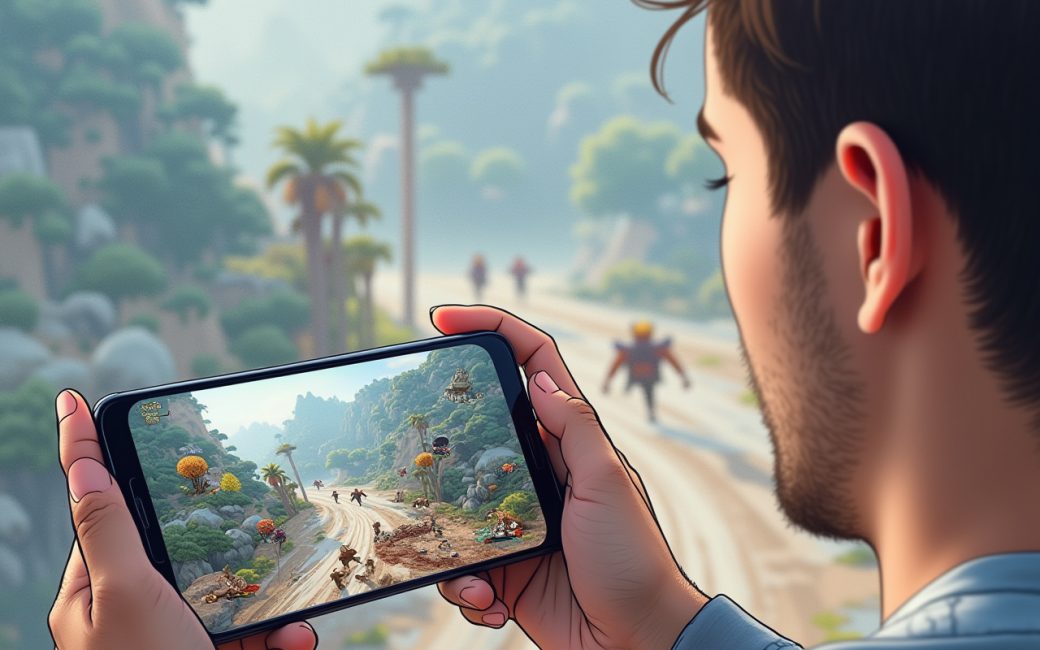
Demanding 3D mobile game runs the chipset at full load
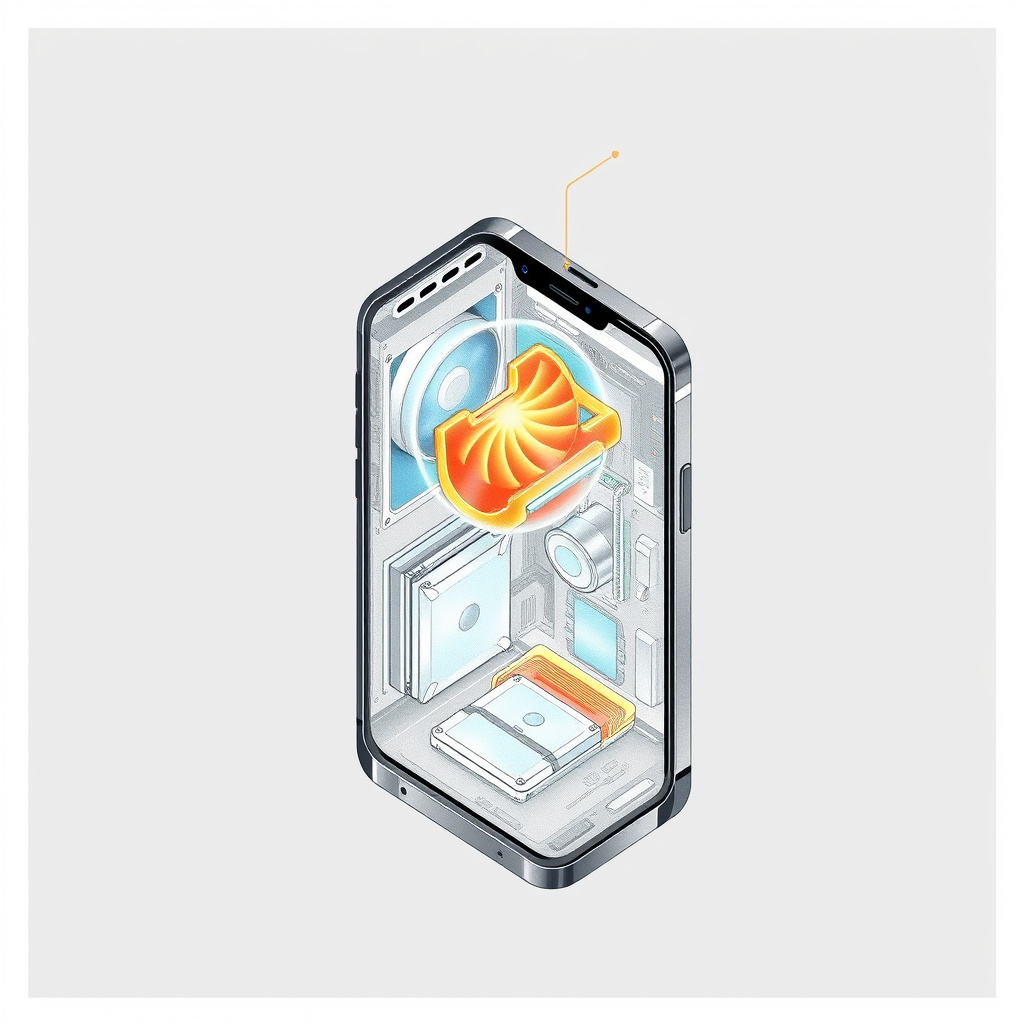
A demanding 3D title — open-world action, competitive shooters, anything rendering complex geometry at high frame rates — pushes a phone's chipset and GPU to their ceiling almost immediately. That sustained load is the real test of a gaming phone, not the number printed on the spec sheet.
Heat builds up fast in a thin phone chassis, because there's little metal or airspace to carry it away from the silicon. Once the chipset's temperature sensors trip a limit, the phone throttles: clock speeds drop, and frame rate falls mid-session, often after the reviewer's short benchmark run has already ended. This is why a phone that posts an impressive peak benchmark score can still feel worse to play on than a phone with a lower peak but better heat management.
Phones marketed specifically for gaming try to buy back that lost headroom with a vapour chamber or another form of active cooling, spreading heat across a larger surface or moving it away from the chip entirely. That hardware doesn't change the chipset's ceiling, but it lets the phone sit closer to that ceiling for longer. A buyer comparing two phones with the same chipset name should treat that name as a starting point, not an answer, and look instead for how each phone performs over a thirty-minute or hour-long session — sustained frames-per-second and how much the frame time varies — rather than the single highest number either one can hit for a few seconds.
Buyer wants smoother-looking gameplay
Smoother-looking gameplay depends on the display's refresh rate at least as much as on the chipset underneath it. The panel can only show as many frames per second as its refresh rate allows, no matter how many the GPU is capable of producing.
A 120Hz-class display can present twice as many frames per second as a standard 60Hz panel, which is why high-refresh screens read as noticeably smoother during fast panning or quick reaction gameplay. But that benefit only appears if the game itself supports the higher frame rate — many mobile titles, including large numbers of casual and browser-based games, are built and capped around 30 or 60 frames per second regardless of what the screen can display.
That makes refresh rate a benefit worth paying for selectively rather than universally:
- Fast-paced competitive or action titles built with high-refresh support benefit directly.
- Turn-based, puzzle, narrative and most casual games show no visible difference above 60Hz.
- Browser-hosted game libraries, the kind found on general gaming sites, generally aren't built to push past standard frame rates at all.
A buyer whose library leans casual is paying for a spec their games can't use.
Buyer asks 'which device is best for gaming?'
There's no single best device, because the question splits along platform lines before it splits along price. Android and iPhone solve the same problem — running games well — with different trade-offs, and the right pick depends on which games and which ecosystem the buyer is already committed to.
| Factor | Android gaming phones | iPhone |
|---|---|---|
| Hardware focus | Gaming-specific chassis, cooling, and controls at multiple price points | General flagship hardware, no gaming-branded tier |
| Chipset performance | Flagship-class chipsets, wide spread of lower tiers below them | Consistently competitive chip performance across the line |
| Price spread | Wide, from budget to premium gaming-branded models | Narrower, concentrated at flagship pricing |
| Game library | Broader range including sideloaded and browser-based titles | Curated App Store library, strong console-style titles |
A buyer already invested in an Android game library, controller peripherals, or a specific gaming-branded chassis has reason to stay there. A buyer whose games and other devices sit inside Apple's ecosystem gets competitive chip performance without needing a gaming-specific model at all. The decision follows existing commitments more than it follows a ranked list of hardware.
Gaming-first phone prioritises chip, display and cooling
A gaming-first phone spends its budget and internal space on three things: the chipset, the display, and the cooling system that keeps the chipset running near its peak. Everything else in the phone competes with those three for the same finite space and price.
Camera quality is typically what gets compromised. A vapour chamber and larger battery take up volume that would otherwise go to a bigger sensor or additional lens, and the price ceiling that funds a flagship-grade chipset and 120Hz-class panel leaves less room for camera hardware than a general flagship at the same price point.
That trade-off matters most to someone who wants a single phone for everything, not a dedicated handheld. A buyer in that position generally does better weighing a mainstream flagship — with balanced camera, chipset and cooling investment — against a gaming-branded model that has clearly optimized away from photography. The gaming phone wins if gaming is the dominant use case; the flagship wins if the phone also has to be the only camera the buyer owns.
What "gaming phone" actually means
A gaming phone is any smartphone whose hardware and marketing are built around mobile game performance first, ahead of camera, size, or general design priorities. The category exists because a phone optimized purely for calls, photos and apps makes different trade-offs than one built to sustain a demanding game for an hour without dropping frames — even when both use similar chipsets. A game in the broadest sense covers everything from a five-minute puzzle to a graphically intensive open-world title, and that range is exactly why "gaming phone" needs its own category: the phone that plays one kind of game well may be no different from any other handset when playing the other.
Sustained performance is the buying criterion that matters
Sustained performance — how well a phone holds its frame rate over a long session rather than a short burst — is the criterion that actually separates one gaming phone from another. A single benchmark run rewards peak clock speed; a real play session rewards whatever keeps that clock speed from collapsing after ten minutes.
Two figures capture this better than a headline score: how much the frame rate drops from its opening minutes to its later ones, and how consistent the time between frames stays across that drop. A phone that loses a small amount of frame rate but keeps frame timing steady will usually feel smoother to play than one that holds a higher average but delivers frames unevenly.
The chipset sets the ceiling, not the outcome
The chipset — a flagship Snapdragon 8 Elite-class processor is the current reference point most gaming phones are built around — determines the maximum performance a phone can reach, but not whether it holds that performance. Two phones sharing the same chip can post noticeably different sustained results depending entirely on chassis design and cooling.
That's why chipset name alone is a weak buying signal on its own. It tells a buyer what ceiling exists; it says nothing about how much of that ceiling the phone will actually deliver once it's warm.
Display refresh rate only pays off with the right games
A high refresh rate display is only worth its premium when paired with games built to use it. The panel and the game's frame output have to match for the smoothness to show up at all — a fast panel driving a 30fps-capped game gains nothing over a standard screen.
Many of the lightest, most widely played mobile and browser games, the kind found across large casual libraries like Poki, CrazyGames and Addicting Games, run comfortably within standard frame rates and modest hardware, which means the refresh-rate premium buys nothing extra for a buyer whose time is mostly spent there rather than in graphically demanding titles.
Screen size trades immersion against handling
Screen size is a straightforward trade-off between immersion and one-handed comfort, with no single correct answer. A larger panel shows more detail and gives on-screen controls more room to sit apart from the action, which matters in titles with dense heads-up displays. A smaller, lighter phone is easier to hold steady through a long session and easier to carry when gaming isn't the day's main task.
Buyers who split time between demanding action titles and lighter fare — including sideloaded or DRM-free PC-style libraries such as those distributed through GOG, or narrative titles from developers like Choice of Games — tend to find that screen size matters far less for the latter category, since text-driven or turn-based games rarely demand the extra real estate a large panel provides.
Match the phone to the games actually being played, not to the biggest number on any single spec sheet, and check a review's sustained-session figures before trusting its peak benchmark score.