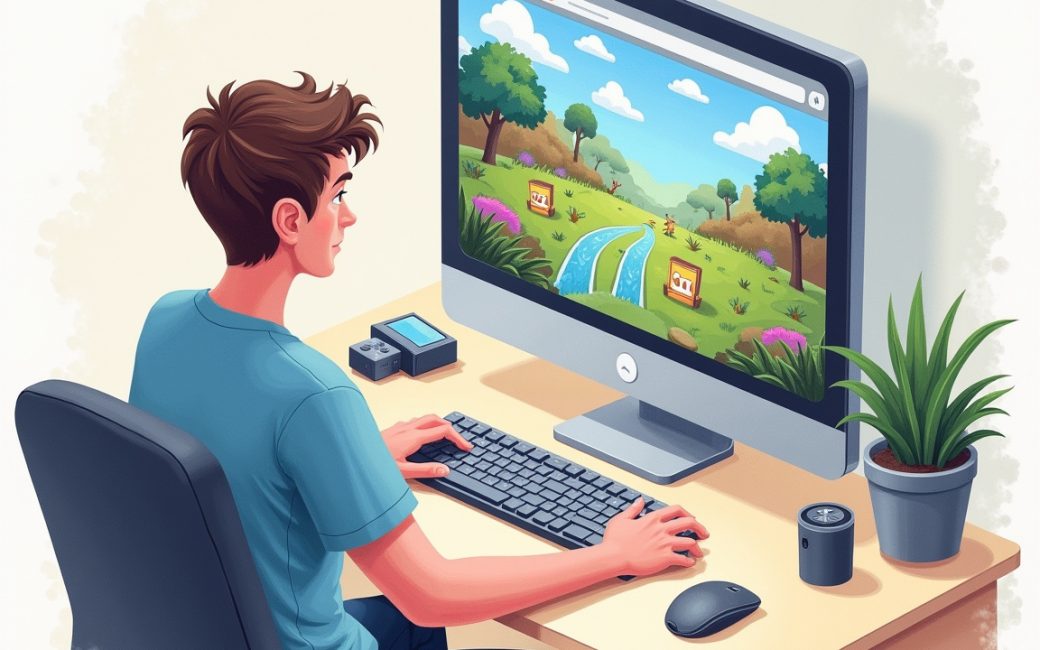
Player wants to game without installing anything
The fastest route into a game is a link that opens in a tab, not a download that needs an account, storage space, and a restart. Browser games are built to run entirely inside the browser, drawing on the device's existing graphics and network stack rather than installing anything locally. That's the distinguishing feature of a catalogue like itch.io's web platform listing, where every title filtered under "Web" is playable the moment the page loads — no client, no patch, no separate launcher.
This matters because app-store listings and browser portals solve different problems. An entry such as the Online Games app on Google Play bundles many titles behind a single install, which suits someone who wants one icon on a home screen and is willing to wait for a download. A browser portal suits someone who wants to click once and be playing within seconds, with nothing left behind afterward if they close the tab.
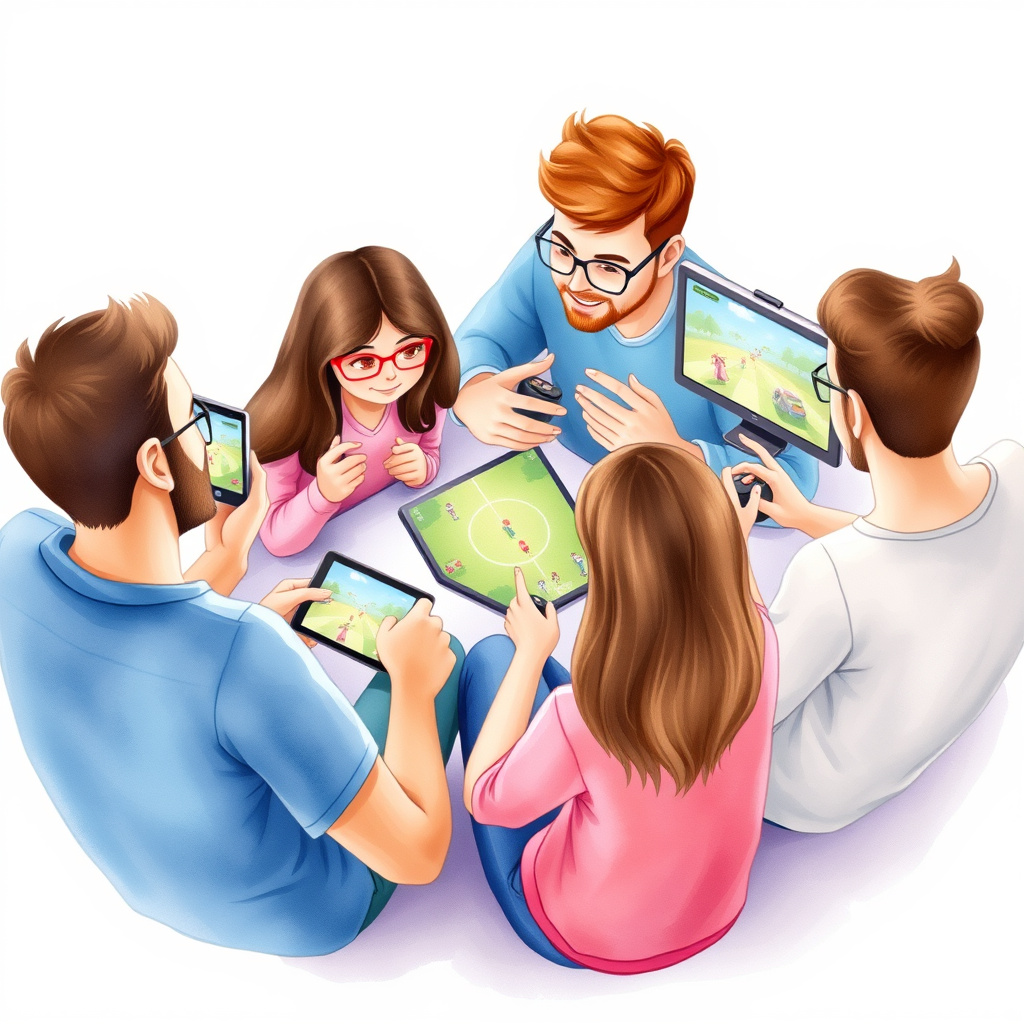
Player wants to play with friends or family
Playing together means every participant needs their own live internet connection for the session, not just the person who found the game. A shared multiplayer game only works if each person's device can reach the same server at the same time — if one person's connection drops, that person drops from the session even if everyone else stays in.
Picking a genre that actually supports shared play narrows the search fast:
- Word and trivia games — turn-based, tolerant of slow connections, work well across mismatched devices.
- Card games — fixed player counts, short rounds, easy to resume if someone needs to step away.
- Party and drawing games — need steadier connections for real-time guessing or voice, better suited to everyone being online at once.
Game On Family's catalogue is built specifically around this kind of shared-session play rather than solo titles, which is the detail worth checking before picking a game for a family group: does the title actually support a join-by-link or join-by-room-code flow, or is it single-player with a leaderboard dressed up as "multiplayer"? The practical join mechanic — one host creates a room, shares a code or link, and each other player opens that same link on their own device — is what separates a genuine group game from a game that merely has other people's scores attached to it.
Catalogue site lists hundreds of free titles
Scrolling a list of hundreds of titles produces the same reaction every time: nothing gets chosen because everything looks interchangeable. The fix isn't a longer list, it's a filter — by genre and by the amount of time available.
| Session length | Genres that fit | Example portal |
|---|---|---|
| Under 5 minutes | word, arcade, simple puzzle | bgames.com |
| 10–30 minutes | card games, strategy puzzles, platformers | itch.io web games |
| 30+ minutes | adventure, simulation, longer strategy | gamesfree.io |
Genre filters do more work than a "most popular" sort, because popularity on a catalogue site usually reflects what loads fastest or advertises hardest, not what suits the five minutes someone actually has free. A puzzle game that takes thirty seconds to understand belongs in a coffee-break slot; a strategy title with a persistent board state doesn't.
A web game fails to load or runs poorly
A browser game that won't load is almost always a browser version, device, or connection problem, not a fault in the game itself. The checklist is short and ordered for a reason — each step rules out one cause before moving to the next.
- Confirm the internet connection is stable, since most browser games stream assets continuously rather than loading everything up front.
- Update the browser to its current version; older browsers may lack the rendering features a newer game expects.
- Try the same title on a different device or browser to isolate whether the problem is the game or the machine.
- If the browser version consistently fails, check whether an installed app version exists, such as the bundled titles on Google Play's Online Games listing, which don't depend on a browser's rendering engine at all.
If every step fails, the game is the problem, not the setup — worth knowing before spending more time troubleshooting a device that's actually fine.
What "most played" actually means
There's no single answer to which online game is played by the most people, because "most" can mean concurrent players at a given moment, lifetime downloads, or monthly active accounts, and these produce different rankings. A puzzle game with enormous mobile install numbers and a browser-based party game with a huge concurrent peak during a live event are both plausibly "the most played game" depending on which measure is used. Any claim of a single most-played title is only meaningful once it states which of those three it's counting.
Genuinely free versus free-to-start
"Free" on a game portal usually means free to start, not free throughout. Many titles carry advertising between levels or offer in-app purchases for extra lives, cosmetic items, or faster progress, and a page that lists a game as free rarely distinguishes which model it uses. Before settling into a longer session, it's worth noting whether the portal's own listing mentions ads or purchases — itch.io's web-platform filter tags pricing per title, which is a more reliable way to check than assuming "free" means no further costs.
Family-friendly portals and child safety
A portal built for younger players handles accounts, ads, and other-player contact differently from a general catalogue, and that difference is worth checking before handing a device to a child. PrimaryGames positions itself around games, holidays, and craft content aimed at a younger audience rather than a general adult catalogue, which typically means tighter control over advertising content and no open chat with strangers. A general portal aimed at all ages won't necessarily carry the same restrictions, so the safer default for a child playing unsupervised is a portal built specifically for that age group rather than a general "free games" list.
Online connection requirements once a game has loaded
Not every browser game needs a live connection for its entire duration. Some load their full set of assets once and then run locally in the tab until closed, while others — particularly anything multiplayer or score-syncing — stay dependent on the connection throughout. A single-player puzzle title is far more likely to tolerate a dropped connection mid-session than a shared party game, where losing the connection ends the session for that player immediately.
Device and session practicalities
Mobile devices and desktop browsers don't always render the same game identically — touch controls replace keyboard and mouse input, and screen size changes how much of a game board or level is visible at once. A game designed with small touch targets and short levels, common across mobile-first catalogues, tends to translate well to a phone; a game built around precise mouse movement or a large visible play area tends to suit a desktop browser better. Checking which input method a title was designed for, before assuming it will work equally well on whatever device is nearest, avoids a chunk of the loading and control problems that show up on mobile.
Where to actually look
Different catalogues suit different intents rather than one being simply "best":
- For a fast, no-account browser session: bgames.com or bored.com.
- For filtering by genre and checking pricing per title: itch.io's web platform list.
- For shared family sessions with a join-by-link flow: Game On Family.
- For a younger, lower-risk environment: PrimaryGames.
Pick the catalogue that matches the intent — speed, genre control, group play, or child safety — rather than treating any one list as the default starting point.
Open one of the links above, pick by genre and the time actually available, and start the session — that's the whole decision, repeated as often as needed.